The White Shirt

The one piece that does it all

10 Ways to Restyle Your Classic White Shirt

2026-07-13

Quick Answer: Ten restyles from four levers. Buttons: top button done, two undone, or fully open as a layer. Tuck: full tuck, French (front-only) tuck, or knotted at the waist. Layering: under a slip dress, over a turtleneck, or under a knit vest. Shoulders: draped over the shoulders, worn off one shoulder, or belted. Nothing here requires buying anything — it’s the same shirt in ten configurations.

You own a white shirt. You wear it exactly one way.

Statistically, that way is “buttoned, tucked, sleeves down,” and you’ve been doing it since you bought it.

The shirt isn’t boring. The routine is — and there are four levers on it you’re probably not touching.

10 Ways to Restyle Your Classic White Shirt

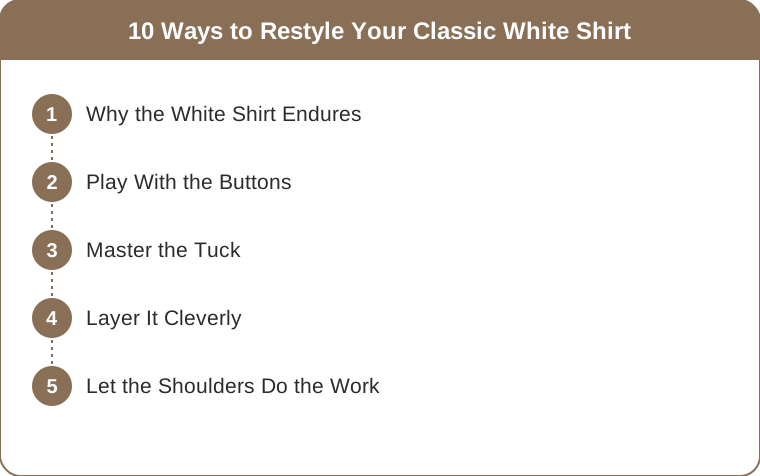
At a glance

Why is the white shirt worth restyling instead of replacing?

Because it’s a blank canvas, and blank canvases are the only pieces that reward variation this much.

A white shirt goes with every color, every bottom, and every level of formality. That’s the whole reason it’s endured for a century — and it’s also why it gets stuck in one configuration. Nothing forces you to reconsider a piece that already works.

The practical upside: ten looks out of one garment is ten looks that cost nothing and take up no closet space. There is no purchase in this article.

How do the buttons change the whole look?

More than anything else on the shirt, and it’s the lowest-effort lever.

  • Buttoned to the top. Sharp, slightly formal, a little fashion-forward. Works especially well under a knit vest or with statement earrings, since it clears the neckline entirely.
  • Two or three undone. The default relaxed version. Creates a V at the neckline that lengthens the torso and softens the whole outfit.
  • Fully open as a layer. Now it’s not a shirt, it’s a light jacket — worn over a tank, a bodysuit, or a fitted tee. This is the single biggest change you can make without touching anything else.

Sleeves count too. Rolled to just below the elbow reads casual and deliberate. The trick is rolling wide and loose rather than tight and narrow — a wide roll sits properly and doesn’t slip.

10 Ways to Restyle Your Classic White Shirt

What’s the difference between a full tuck, a French tuck, and a knot?

They produce three genuinely different silhouettes, and most people only use one.

The full tuck. Everything in, waistline fully visible. The most formal and the most defined. Best with high-waisted trousers or a skirt where the waistband is meant to be seen.

The French tuck. Front hem tucked, back and sides left out. It defines the waist while keeping the length and coverage of an untucked shirt — which is why it’s become the default. It works with almost every bottom, including low and mid rises where a full tuck looks awkward.

The knot. Tie the front hems together at the waist. Casual, a bit playful, and it shortens the shirt to whatever length you want. Works best with a shirt that’s slightly oversized — a fitted shirt doesn’t have enough hem to knot cleanly.

How do you layer a white shirt?

Three combinations that reliably look considered rather than accidental.

Under a slip dress. The shirt goes on first, the dress over it. Sleeves and collar show, everything else is covered. It converts an evening dress into daywear and is the most-copied layering move of the last several years for good reason.

Over a turtleneck. Thin turtleneck first, shirt over it, buttoned or partly open. Reads intellectual and deliberate, and it extends a summer shirt into cold weather.

Under a knit vest. Collar and cuffs out, vest over the body. It’s the preppy-revival combination and it works because the vest supplies texture where the shirt is plain.

The common principle: the shirt is contributing collar and cuffs, not the whole garment. Once you see it that way, the combinations multiply.

How it works

What can you do with the shoulders?

Three moves that treat the shirt as a shape rather than as clothing.

Draped over the shoulders. Not worn — hung, sleeves loose or lightly knotted at the front. It’s a layer, a color block, and a solution to an over-air-conditioned restaurant all at once.

Off one shoulder. Unbutton the top two or three, pull one side down past the shoulder. Casual and a little undone, and it works best on a shirt with some ease.

Belted. Wear it open or buttoned and cinch a belt at the natural waist. This turns a straight shirt into a defined shape and is the fastest way to make an oversized shirt look intentional rather than borrowed.

A note on the base: all three of these are easier over something fitted. A tank, a bodysuit, or high waist yoga pants with a close top gives the shirt something to be a shape against.

What Nobody Tells You

  • An oversized shirt restyles better than a fitted one. More fabric means knots, drapes, and belts all work. A slim-fit shirt can really only be buttoned and tucked.
  • Fabric decides how many of these you get. Crisp cotton poplin holds a collar and a roll. Soft rayon drapes and knots but won’t stand up at the neck. Owning one of each covers everything.
  • White shirts yellow at the collar from product, not dirt. Sunscreen and hair product are the usual culprits. Pre-treating the collar before washing prevents most of it.
  • Fit at the shoulder is the only measurement that matters. Everything else can be tucked, rolled, or belted around. A shoulder seam in the wrong place can’t be fixed.
  • Two white shirts beat one. They wear out in rotation and one is always in the wash. It’s the rare basic where the duplicate is genuinely worth it.

FAQ

How many white shirts should you own?

Two is the practical answer for most people — one crisp cotton poplin for structured looks and one softer, slightly oversized shirt for draping, knotting, and layering. They cover different halves of the styling range, and having two means one is always available while the other is in the wash.

What’s the best fit for a versatile white shirt?

Slightly oversized through the body with the shoulder seam sitting correctly at your actual shoulder. The extra room through the body is what makes knotting, belting, and open layering possible, while a correct shoulder seam is the one thing that can’t be styled around. Sleeve length can be rolled, so it matters far less.

How do you keep a white shirt actually white?

Wash it after every one or two wears rather than letting product build up, and pre-treat the collar and cuffs before washing — the yellowing is usually sunscreen and hair product rather than dirt. Avoid chlorine bleach on anything with elastane, which it yellows over time; an oxygen-based whitener is gentler and more effective on cotton.

TL;DR:

  • Four levers: buttons, tuck, layering, shoulders. Ten looks, no purchases.
  • Buttons: top-buttoned, two undone, or fully open as a light jacket.
  • Tucks: full, French (front only), or knotted — three different silhouettes.
  • Layer it under a slip dress, over a turtleneck, or under a knit vest — the shirt supplies collar and cuffs.
  • Shoulders: draped, off one shoulder, or belted at the waist.
  • Slightly oversized restyles far better than slim fit; shoulder seam is the only fit that can’t be worked around.

Keep Reading

This article is for general styling and informational purposes only. Trends, sizing, availability and pricing may vary by brand and season.

white shirtstylingwardrobe basics

← All articles