The White Shirt

The one piece that does it all

How to Find the Perfect White Shirt

2026-07-11

Quick Answer: Check four things, in this order. Fabric — substantial cotton or a cotton blend with structure, held up to the light to test opacity. Shoulders — the seam must sit exactly where your shoulder ends, since it’s the one thing a tailor can’t fix. Bust — it should lie flat with no gaping between buttons. Details — a collar with real interlining and cuffs that hold a rolled sleeve. Everything else can be altered.

Not all white shirts are created equal, and the failures are all specific.

The wrong one goes sheer in office lighting. It gapes between the buttons the moment you move. It turns a faintly grey, faintly yellow color after three washes and never recovers.

The right one becomes the most-worn piece in your closet — the thing you reach for under a blazer, over jeans, half-tucked on a Saturday, for years.

Here’s exactly what separates the two, and the fabric test in the first section takes about four seconds.

How to Find the Perfect White Shirt

Fabric Is Everything

Start here, because no amount of good fit rescues bad fabric.

Look for substantial cotton, or a cotton blend with structure. Poplin, oxford cloth, or a heavier broadcloth. Thin, flimsy fabric wrinkles the moment you sit down and goes translucent in any strong light.

The four-second opacity test: hold the shirt up to a window or overhead light. If you can clearly see your hand through a single layer, it’ll be see-through when you’re wearing it. A good white shirt has enough weight that you’re not reaching for a camisole underneath.
A useful specification if it’s listed: fabric weight around 110–140 gsm for a crisp poplin, heavier for an oxford. Higher thread counts feel smoother but aren’t automatically more opaque — weight matters more than count.

On blends. A small amount of elastane, 2–4%, adds comfort and helps with bust gaping without much cost to the look. More than about 5% starts looking cheap and holds odor. Pure cotton wrinkles more but ages far better and stays whiter over years.

What a good one feels like: crisp, with a bit of body. It should hold its shape when you hold it up by the shoulders rather than collapsing.

Styling flat lay

Check the Fit at the Bust and Shoulders

The most common white-shirt failure is gaping between the buttons across the bust. It’s also the most avoidable.

Test it in the fitting room properly. Button the shirt, then cross your arms, reach forward, and turn to the side. If a gap opens between the buttons at any point, the shirt is too small through the bust — regardless of what the label says.

Shoulders are non-negotiable. The shoulder seam should sit exactly where your shoulder ends. Not hanging down your arm, not pulling up onto your shoulder. This is the one measurement a tailor genuinely cannot fix without rebuilding the garment.

If the shoulders fit, almost everything else can be adjusted. Sleeve length, body width, waist shaping, hem length — all straightforward alterations in the $15–35 range. Buying a shirt that fits the shoulders and having the body taken in is a completely standard approach and produces a better result than settling for an off-the-rack compromise.

Watch the sleeve length too. The cuff should end at your wrist bone. Too long looks sloppy; too short looks like it shrank.

Point detail

Consider the Collar and Cuffs

These are the details that separate a great shirt from a forgettable one, and they’re where cheaper shirts cut costs.

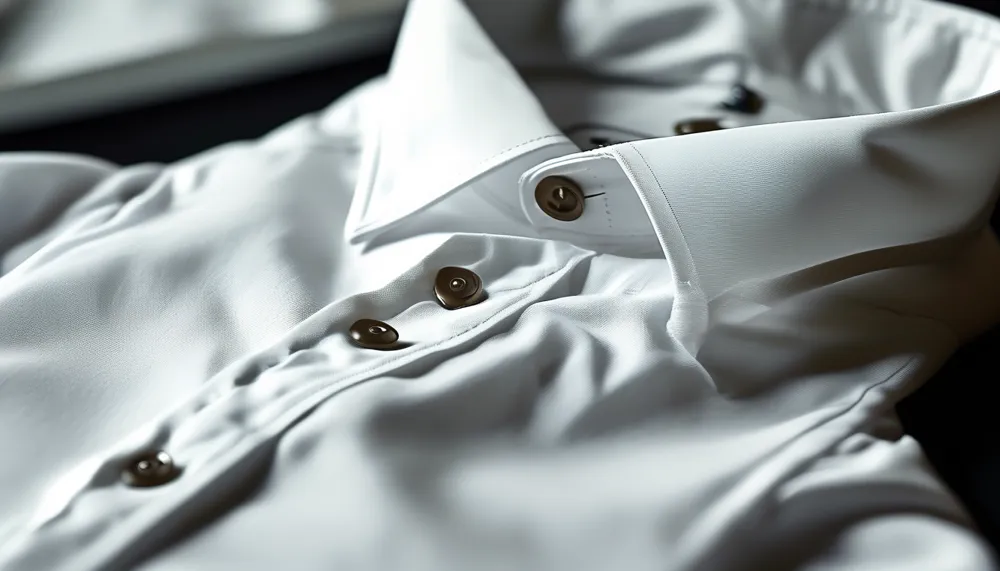
The collar needs interlining. Feel between the two layers of the collar — there should be a stiffer layer inside. A collar with proper interlining stands up when you pop it and frames your face cleanly when open. A limp collar makes the whole shirt look cheap regardless of the fabric.

Check the collar stays. Removable plastic or metal stays in small pockets under the collar points are a good sign. Sewn-in stays are fine but can’t be replaced when they warp.

Cuffs should hold a roll. A structured cuff lets you push the sleeves up and stay there. A soft, unstructured cuff slides back down every fifteen minutes, which is a small irritation that adds up to never wearing the shirt.

A quick construction check: look at the seams. French seams or flat-felled seams — where the raw edge is enclosed — indicate a higher construction tier than simple overlocked edges. Also check whether the buttonholes are neatly finished; loose threads on a new shirt predict how the rest will age.

Buy for Longevity

A white shirt gets worn constantly, so the cost-per-wear math argues for spending more than feels comfortable.

What longevity looks like: quality construction, reinforced buttons (check that they’re sewn with a shank or cross-stitched rather than loosely attached), a spare button included, and fabric that survives repeated washing.

Keeping it white is largely about washing, not the shirt. Wash white shirts separately, skip the fabric softener — it builds up and yellows fabric over time — and treat collar and cuff marks before washing rather than after. Avoid chlorine bleach on anything with elastane or on pure cotton over the long run; it weakens fibers and can cause yellowing. An oxygen-based whitener is gentler and more effective.

Dry away from direct heat. High-heat tumble drying is what sets stains permanently and breaks down fibers fastest. Hang-drying and a quick press keeps a shirt looking new for years longer.

Style guide

5 Mistakes Everyone Makes

  1. Not testing the fit seated and moving. Standing still in front of a mirror hides gaping, pulling, and riding up. Sit down, reach, twist.
  2. Buying up a size to fix the bust. This gives you a shirt that gapes slightly less and fits badly everywhere else. Buy for the shoulders and bust, then have the waist taken in.
  3. Skipping the light test. Fitting-room lighting is soft and flattering. Office fluorescents and daylight are neither.
  4. Using fabric softener. It coats fibers, reduces crispness, and contributes to yellowing. Skip it entirely on white shirts.
  5. Owning only one. A white shirt you love gets worn constantly, which means it’s in the wash half the time. Two of the right one beats one of the right one plus three compromises.

Mini FAQ

How do you stop a white shirt from going see-through?

Choose fabric with enough weight — hold it to the light before buying and check you can’t clearly see your hand through one layer. Poplin and oxford cloth are more opaque than voile or lightweight cotton. A well-matched nude bra also reduces visibility considerably more than a white one does.

What is the best fabric for a white shirt?

Cotton poplin for a crisp, dressier look, or oxford cloth for something slightly more casual and durable. A small amount of elastane, 2–4%, adds comfort and reduces bust gaping without much cost to the finish. Pure cotton wrinkles more but stays white longer and ages better.

How do you keep white shirts from turning yellow?

Wash separately, skip fabric softener, treat collar and underarm marks before they set, and avoid chlorine bleach — it can yellow cotton over time and damages elastane. An oxygen-based whitener works better. Dry away from high heat, which sets stains permanently.

TL;DR:

  • Fabric first: substantial cotton or a cotton blend with structure. Hold it to the light to check opacity.
  • Shoulders are the one thing a tailor can’t fix. Get those right and alter everything else.
  • Test for bust gaping seated and moving, not standing still.
  • Collar needs interlining; cuffs need to hold a rolled sleeve.
  • Skip fabric softener and chlorine bleach, wash separately, dry away from high heat.

The perfect white shirt is worth the hunt: substantial fabric, a clean fit through the bust and shoulders, and details that hold up. Get it right and you’ll have the hardest-working piece in your entire wardrobe.

Keep Reading

This article is for general styling and informational purposes only. Trends, sizing, availability and pricing may vary by brand and season.

← All articles